
POSTMODERNISM: or, a culture of immaturity
- iamjamesdazell
- Sep 14, 2025
- 33 min read
Updated: Dec 3, 2025
Why culture is stuck in perpetual adolescence.
INTRODUCTION
The Rot of Culture
Reality has always been a sixth sense rather than a common one. We live in a world where reality lies beneath appearances. Live with others as they are, not as you think they should be. Self-awareness of reality makes life more vivid, the more vivid it is the better it’s managed. Instead of tension, everything becomes a dance. The greatest sign of wisdom is the cheerfulness of an educated mind.
I’m not going to paint a false picture of the past as though there was some golden age that we have fallen astray from. Stupidity, imprudence, foolishness of all kinds has and will always exist. Even in the most supposedly intelligent of circles. But we find ourselves in a peculiar cultural time of, not a crisis of intelligence, so much as a pathology of immaturity. As though our culture were a sort of Benjamin Button regressing into an ever-increasing juvenilia. We have a landscape of content, not culture, of media not art. It would benefit culture for audiences and institutions to recognise the difference.
To spare the French more generally bearing the brunt of the issue. Some of the most realist philosophers are almost all French. Francois de la Rochefoucauld, Ninon de L’Enclos, Moliere, Montaigne, La Bruyere. But after the proto-existential writers like Dostoevsky and Nietzsche, who are in my opinion both existential thinkers, there came a whole host of immaturity of French philosophy. Albert Camus, Jean-Paul Sartre, Simone de Beauvoir, and so on, and we arrive at the key French postmodernists Derrida, Deleuze, Foucault, Lyotard, Barthes, Baudrillard, who formed an insular intellectual tribe.
These French philosophers were celebrity intellectuals and stayed celebrities by continuing to say provocative things. Whether it makes sense didn’t mean anything. It kept them in the papers, kept them selling books, appearing on TV, and teaching at reputable institutions.
The 1960s created its own autochthonic myth that it was a moment of cultural liberation and what was before it was some stuffy bookish ascetic world. The whole postmodern progressive-conservative dichotomy is already framed in the myth. As if the roaring jazz age of the 1920 and 1930s never happened with its innovative explosions of modern art and modern dance - which itself was motivated by the liberating thought and art of the 1880s. The idea of the 1960s myth of being an autochthonic miracle, invented by the silent and boomer generations, was perpetuated easily by future generations since colour television was released in 1953, and all of the staple electric guitars were invented during the 1950s, we all could see a visible shift in culture. I was always led to believe the 1950s was a dangerously conservative time and the 1960s was always pitted against that era. When in hindsight the 1950s had the more interesting cinema and literature, to which the 1960s was indebted to.
Postmodernism sprang up in the 1960s not only through philosophers but artists like Andy Warhol and Jean-Luc Godard, where we already see this intertextual referencing of culture speaking about itself to itself, and this sort of smug grin at form itself. But it really took off in the 1970s. David Bowie famously said the twenty-first century began in the 70s.
The problem, however, is not confined to one generation. The silent and boomer generations developed and cultivated this postmodern mindset, and younger generations have merely inherited and perpetuated it. The true issue with the culture of our time is not Gen-Z or any other specific group, but postmodernism itself—an intellectual bubble that has replaced authentic culture with a continuous stream of what Baudrillard called “hyperreality.” Once we recognise and define this problem, we can finally set it aside and focus on its alternative.
DEFINITIONS
The Postmodern Condition
Jean-Francois Leyotard was the person who came up with the term postmodernism in his 1979 book "The Postmodern Condition: a report on knowledge." But as with all naming of things, it comes after the culture came into being. Postmodernism as a cultural condition arose earlier. The title of his book is interesting, since I’m going to repeat that the postmodern condition is not an epistemological issue but an ontological issue. Not to do with knowledge but to do with being. Postmodernism is not merely a philosophical school of thought, but a cultural condition—a state of being that is best understood as a self-contained heterotopia.
This word – heterotopia – was coined by one of the prominent postmodernists, Michel Foucault. A place which has its own rules that differ from the rules of other human society. Foucault used the analogy of a ship at sea whose members behave according to the rules of the ship rather than the rules of the kingdom they are from. I think it befits what postmodernism is itself. Postmodernism is so out of touch with reality that it only exists as a ship in open waters.
Our culture has abandoned the pursuit of art, which interprets reality for long-term contemplation, in preference for media, which takes the raw material of reality and repurposes artifice for short term reaction. The original state of a thing is extracted, stripped of its authenticity, and transformed into a series of distorted derivatives, each one losing more of its connection to the original. Baudrillard explains this theory in his 1981 book Simulacres et Simulation. He doesn't give an example so I'm using the context of the story of the man in the iron mask.

Phase 1: The Reflection of Reality
Let's begin with the real unidentified historical prisoner in 17th-century France under the reign of Louis XIV.
Voltaire first popularised the legend of a masked prisoner in The Age of Louis XIV (1751), presenting a mysterious but grounded story that still referenced a real political context.
Here, the “mask” refers to an actual enigma — tethered to a historical reality.
Phase 2: The Perversion of Reality
In the 19th century, the novelist Alexandre Dumas adapted the tale into The Vicomte de Bragelonne (1847–50), turning the prisoner into the twin brother of Louis XIV. Dumas dramatised the historical rumour, exaggerating its romance and intrigue. Now the story is a distorted version of reality — an imaginative fiction layered over a historical kernel.
Phase 3: The Pretence of Reality (conceals absence of reality)
Then cinema enters, and George Bruce’s screenplay in James Whale’s 1939 film do not adapt Dumas’ novel, but rewrite it to suit an exciting movie, presenting the tale as if it were history, despite the lack of historical evidence. Cinema’s realism (costumes, sets, court intrigue) makes the fiction feel like a plausible account of the past.
At this stage, the films conceal the fact that the historical referent (the real prisoner) is unknowable. The fiction pretends to preserve reality, but reality is already absent.
Phase 4: Pure Simulacrum (no relation to reality at all)
Later adaptations, such as Richard Chamberlain’s 1977 television version and Randall Wallace’s 1998 Leonardo DiCaprio film, remake not Dumas’ book nor original sources, but lift from Bruce’s Hollywood rewrite. These are pure spectacles: swashbuckling star vehicles full of romance and melodrama. At this point, the “Man in the Iron Mask” exists mainly as a cultural trope — a story about kings, masks, and secret identities — with no concern for the reality of the history at all.
This is hyperreality - where the simulation becomes more real to us than the reality because it is a distorted derivative of reality. The original state that is reality, loses its meaning, and authenticity, it loses its purpose except as a source of creating a derivative hyperreality. We could propose another example of Dostoevsky's Notes from Underground (1864), then the film Taxi Driver (1976), then Joker (2019), then Joker 2 (2024). Hyperreality passes through these four derivative phases because simulation is both appealing and dissatisfying. We dispose of them as fast as we consume them and constantly need replacing them.
THE 3-PART MODEL
This 3-part model is kind of a continuation on the video I made called What Happened to Gen-Y and how in 1990s the technology companies needed to create a market in the home for the personal computer that the tech industry hadn’t quite accomplished yet because the computer at the time was still understood as a tool for work. Movies came out trying to present young people using computers in cool ways like hacking. Then they created the term Millennials to create a whole consumer market around personal technology. The youngest generations like Gen-Z and Gen-Alpha have grown up in that world. But that is itself just a small bubble in a much larger model of postmodernism and its economic interest.
This model synthesises the ideas of Noam Chomsky, Roland Barthes, and Jean Baudrillard to explain how modern culture has become a self-reinforcing system of ideological control. It argues that the hyperreality of our time is not an accident of technology but a deliberately constructed environment that serves specific political and economic interests.
The model operates in three distinct parts:
1. The Cause (Chomsky): This is the structural cause, the "why." Noam Chomsky’s Manufacturing Consent shows how media operates as a propaganda system. The truth exists, but it is systematically filtered out by structures such as corporate ownership, advertising dependence, and reliance on elite sources. The goal is not information but profit and control.
2. The Mechanism (Barthes): Roland Barthes’s Mythologies explains the ideological mechanism at work. Barthes provides the ideological tool that bridges the corporate motives with the public's experience. He argues that a myth takes something with a simple, factual meaning (a sign) and adds a second, more powerful layer of meaning (a signifier). This second layer is ideological and often serves to reinforce the values of a dominant culture. Culture does not simply reflect reality; it transforms signs into myths. It begins with simple things, such as a car that transitioned from its practical meaning of being a vehicle to cross long distances with greater ease, but became a symbol of wealth, freedom, and success.
3. The Effect (Baudrillard): Jean Baudrillard’s Simulacres et Simulation, describes how postmodern reality dissolves into hyperreality, where the image is more real than the thing it represents. The combined forces of corporate control and myth-making leads to the dissolution of reality. The human drive for authenticity is rerouted into consumerist simulations—concerts, holidays, and even wars become experiences consumed as media images. At its peak, culture is no longer tethered to reality but becomes an endless circulation of signs. This creates a closed loop where people's needs are met by a simulated reality, which, in turn, generates profit for the corporations who control the system.
Chomsky hates the postmodernist philosophers, but in this synthesis they describe different parts of the same phenomenon. For Chomsky, media systematically distorts an objective reality for a specific purpose: maintaining the status quo and ensuring corporate and political interests are served. Baudrillard argues that the problem is not a simple distortion of reality but its dissolution. He contends that in a media-saturated society, the distinction between reality and its representation has collapsed. Chomsky's and Baudrillard's media critiques are fundamentally different in their approach, scope, and conclusions. Chomsky's is a realist, political-economic analysis, while Baudrillard's is a metaphysical and cultural one. Though corporate advertising, media networks and tech-corporations have their interests in creating this landscape, I’m also saying that it’s participated and perpetuated now by everyone. Social media became the very fabric of a new, hyperreal existence where the image is more real than the thing it represents. The population loses sight of an authentic reality, while corporations benefit from a perfectly self-sustaining system of profit. Eventually culture becomes a form of capital advertising, media limits the range of acceptable discourse, where the population lose sight of reality and elites make big profits. This process ensures that we continue to consume and participate in the very system that created the simulacra in the first place.
In this unified framework, a capitalist-driven media structure uses myth-making to transform reality into a self-serving, hyperreal simulation, thereby ensuring the continuous flow of profit
and creating a culture where the simulation of being is more valuable than being itself.
Postmodern culture is one of hyperreality, where media has become so pervasive that it has blurred the lines with reality itself. Media is a medium that recontextualizes artifice for reaction, replacing traditional art, literature, and direct observation, etc as the primary means of contemplating and exploring life's deeper experience. This leads to a world of intertextuality, where new cultural products are merely self-referential remixes of what already exists. The combination of intertextual cultural products, a media hyperreality, and a disbelief in empirical objective truth leads to a Meta-World of Simulacra: This refers to the replacement of direct, unmediated reality with a simulation of reality by aesthetic illusions. We experience and remember a reality that is filtered and pre-packaged, leading to a kind of aesthetic memory that supplants authentic experience.
Postmodernism is very similar to how corporate media thinks in the first place. Distorting the evidence of truth through half-formed statements, confusing an audience with authoritative sounding language, perpetuating an endless discourse without arriving at conclusions, provoking immature reactions to cause a sensational stir, self-indulgent to its own claims.
Culminating in a profound disconnection from direct experience. This lack of direct engagement leads to a crisis of authenticity in our perception, feelings, and memory. This condition finds its ultimate, tangible expression in modern technology. Platforms like Instagram, which act as a “Potemkin Village” of curated facades, and the push for the metaverse, which embodies the ultimate simulacrum, are the logical endpoints of this worldview. The constant intertextual referencing lacks direct engagement but relies on mediums to interpret the world and even memories are unclear if they’re our own or someone else's, something we've simply seen online or in the movies, are feelings our own or something we felt from a movie or a social media post or a piece of music.
In this final stage of the model, the ideological control (Chomsky) and mythical mechanisms (Barthes) culminate in a cultural environment where the public has lost its connection to an objective reality. They are left to inhabit a world of aesthetic and ideological facades, perpetually consuming a simulated reality that serves the interests of corporate profit. Culture becomes a simulacrum, a simulation of an illusion without an original reference to reality. The human's natural drives for authenticity and meaning are rerouted toward a simulated, consumerist reality. We seek fulfilment in products and images rather than in genuine experience. This is the peak simulacrum: AI-generated images that have no relationship with reality and are copies of copies.
CRITICISMS
Critiques
Postmodernism is a whirlpool in itself so I don't advise getting drawn into it. In trying to understand it you'll drift away from reality. Postmodernism is simply not that concerned with reality. It is a metaphysical philosophy in essence. If French existentialism were to represent the individual then French postmodernism represents its corresponding metaphysical reality. I'm not going to romanticise it as a world of dreams. It's a world of derivative impressions. We find ourselves today to live in a culture that places higher value on aesthetic simulation than reality.
In-line with this dissolution of reality, the central critique of postmodernism is its stance against objectivity. This is something very different to Nietzsche’s perspectivism which I think was a lot more sophisticated. Postmodernists saw history as a representation of a male middle-class view of the world and rejected the notion of an objective view of its history. Existentialism and postmodernism were both anti-Middle Class philosophies.
This stance misrepresents fields of science and history, claiming they are based on an omnipotent, non-biased worldview of absolute truth. Postmodernism caricatures science as monolithic, when in reality science is provisional, self-correcting, and contested. Similarly, history is not a collection of subjective “mini-narratives” but a discipline grounded in evidence and consensus, capable of evolving when new perspectives are substantiated. By mistaking provisional objectivity for authoritarian certainty, postmodernism undermines the very processes that make knowledge reliable.
In this postmodern environment, expertise is devalued and becomes just another minority opinion within the noise of a collective majority of subjective views. Postmodernism's immature understanding of objective truth leads to subjective and moral relativism.
Postmodernism represents half-formed understanding posing as intellectual sophistication, an immature philosophy that avoids conclusions in favour of endless self-perpetuating discourse of a perpetual assertion of relative viewpoints in hope that their voice prevails. The idea that fields like history and science are omnipotently objective and authoritative is an immature one. Postmodernism had to use a familiar simple language and then distort its meaning.
For this reason, it can be difficult to critique postmodernism because its very nature rejects the idea of an objective truth to critique it, making it easy for postmodernists to dismiss any criticism as just another subjective opinion. This reluctance to engage with less representative external perspectives, or interrogate the bias of one's own subjectivity and its contradictions is a hallmark of the postmodern mind.
On the obverse, postmodernism considers knowledge a product of power, and so champions a minority view over the general larger consensus. Inevitably there will always be more of those who know less about a subject or field than those who know. Though a singular voice might relatively feel to be the minority, experts will always be in the minority. Once all those voices who do not know are combined, they become a collective majority each believing themselves to be a minority toppling an authoritative objectivity. This leads to radical polarisation, rather than egalitarian pluralism. Postmodernism's impulse is to take an alternative stance for the sake of it, without first seeking counter-evidence or a new foundation. So, the expert opinion becomes just another opinion in the noise of subjective relativism.
Postmodernism's framing of arguments appear on social media all the time: Here's a recent example. The post was about Fellini's film 8 1/2 - which I adore.

That Fellini's work such as 8 1/2, which blends formailsm with realism, was when he achieved his best use of formalism. So despite the statement being about formalism the conversation immediately becomes a discussion on the definitions of neo-realism. Despite the context and meaning of the original statement, to change the definition of neo-realism would undermine the original statement. These types of comments end with either a generic "that's your opinion and that's my opinion" or more voices entering with increasingly polarised views. But never lead anywhere towards a conclusion, because the original statement was a conclusion in and of itself. But postmodernism's compulsion towards moral relativism needs to undermine every other moral relativism.
Postmodernism perpetuates an endless stream of discourse a that never arrives to its concluding thought. Just like a river that continues forever without ever arriving at the sea. An endless conveyor belt of the continuous stream of media, trends, and content. It never stops, always bringing new opinions, new products, or new simulacra, to be consumed. It is a state of perpetual, unresolved conversation that erodes our ability to find a stable sense of reality or meaning.
The idea that postmodernism demonstrates multiple view points, a pluralism, is not evident either. It merely takes a stance against a prevailing one. Contradictory from its aspirations, this cultural aspiration of pluralism results in a new, unacknowledged authority. The very pillars of postmodernism become the new cultural orthodoxy, and any opposing views are invalidated and relegated to a position of being outside the acceptable narrative.
This new orthodoxy self-validates by inventing a new grand-narrative; that there is only progressive thinking and conservative thinking. It’s a very convenient narrative. It enters a discourse posturing that any opinion that isn’t one’s own must be some relic of that past that’s seeking resurgence. Therefore, every view that isn’t mine is an outdated one. This is basically how postmodernists enter a discourse. Either there’s no complexity because there is only intellectual relativism – it’s just your opinion or my opinion – or there is no complexity because there is only progressive and conservative opinion.
Postmodernism oversimplifies history into modern and pre-modern. It invents its own grand-narrative as the grand-narrative to which it rejects. It arbitrarily starts what’s "Modern" around 1850. It calls everything pre-modern Christianity, as what bound society and meaning. Yet Christianity itself is a complex history that is anything but united. It’s full of internal divisions (Orthodox Greek, Orthodox Russian, Catholic, Protestant, and all its denominations etc.). No historian would take this seriously and there is no sense to it to warrant spending time untangling it. I simply accept that they reject such a history, but only because it’s one that’s not true. Yet despite rejecting this grand-narrative of Christianity postmodernism also poses itself as a redeemer, which ironically aligns it with the very messianic Christian narrative it claims to reject.
The popular story that postmodernism positions itself against a modernity that valued reason, science, and objective truth is oversimplistic at best. The Enlightenment might have done so, but that consists predominantly of a few French and German intellectuals in the 18th century—not a wholesale cultural era of Modernity. Science itself was never in opposition to religion. Isaac Newton was devoutly Christian even going so far as to say the thumb alone was sufficient proof of God, and many scientific advances emerged under religious conditions. Romanticism, which arose at the start of the 19th century, already challenged Enlightenment optimism about science and reason, and Existentialism later carried this critique further. Yet even this timeline is misleading. 20th century Existentialism is simply the essence of Romanticism, and Romanticism is itself an expression of the metaphysical aspect of a religion expressed in art, usually focused on individualism, aiming at an experience which transcends its corporal form. That’s not something limited to the movement of Romanticism. We find Romanticism in Ancient Roman literature, Japanese art, and Platonic philosophy. These labels aren’t confined to particular centuries—they are recurring modes of human thought. Periodic labels may offer historical context, but the human condition itself does not fundamentally change and responds to conditioning in the same way. Postmodernists immaturely reject the past as though something is finished with it. But everyone mature knows history teaches you everything you are yet to learn. Instead of each human being having to go through the same lessons over life, history provides a way to start out in life having the understanding of what some people didn’t acquire until the end of their life. The sacrifice of history and its wisdom leads to a cultural neurosis. By divorcing themselves from the accumulated wisdom of the past, individuals and culture as a whole are left with a deep, unresolved conflict that manifests as a neurotic obsession with appearance and ephemeral trends, to emancipate from life into a sea of beautiful images.
This distortion of history and its preference for subjectivism leads to further problems of representation in history and art. This implies that one will have an inauthentic view of history if they see it outside of their "cultural representation." In other words, it implies that a black person of the United States only has an authentic view of history if they see the history of America through the lens of black history. Or a homosexual to see history through the lens of the homosexual experience. Furthermore, institutions in the arts, whether publishing or theatre, have been highly interested in artists creating work that indulges this view where they create narratives of experience based around their protected characteristics. Audiences on social media were even complaining that actors should no longer play roles which they don’t actually represent, such as genetic, mental, terminal, or physical illnesses. Whereas, now look at great writers like Federico Lorca, or Pedro Almodovar, who are both homosexual men who write narratives about heterosexual women to great acclaim. Regarding representation in art, a contention with postmodernism is the view that the higher objective of art is not to present representative characteristics or experience, but to transcend and efface them into a deeper more unified experience of humanity. The purpose of which is to practice empathy. To empathise with that which is not what you are. And above all, to excel within your chosen art.
There's that great scene in Tár where Lydia Tár is humiliating the postmodern attitudes of her student who rejects significant composers on the grounds of their personal characteristics and life being unaligned with their moral relativism. It was assumed at the time as an attack on Gen-Z and Cancel Culture, but it’s a criticism of postmodern thought. [No need to watch it immediately. Return to it after the essay].
Since postmodernism was very much anti-middle class, I see often in art institutions, if they want to target a working-class audience, they don’t give them anything to do with high-art. I believe they intend to do this out of empathy but it’s actually a form of condescension. They are depriving the working class of a level of art the postmodern institutions have decided is above them and doesn’t belong to them. It deprives a working-class person from something they might have genuinely been inspired by. I always think of two working class artists Martin Scorsese and Alexander McQueen who both became the highest level of their field. Scorsese often references Satyajit Ray's cinema he saw in youth saying that it showed him a world that was beyond his own. Whereas art institutions say let’s give the working class only what they are already familiar with as though the working class will only understand rap and sportswear, and the assumption that the middle class are doing nothing else with their free-time but going to the theatre. Noam Chomsky recalls the 1930s saying there were members of the working class who were very well read and would go to the theatre. And I'm sure that's a statement still true of some today. Postmodern imposes definitions on representation.
Postmodernism inevitably leads us on a trajectory of immaturity. Social media will always be mostly used by the youngest generation whose activity will most define it. Therefore, whilst maturity would hopefully rise with age, cultural maturity will be perpetually defined by its youngest, those know the world least of all and are most immature. Rather than thinking this would be a continuous injection of the new, in fact, it will be a continuous injection of the derivative, since the youngest will be most inclined to imitate what they perceive as successful and valuable.
Derivative doesn’t just mean the influence of one thing upon another, but the continuation of intention and the imitation of those who have done the same, and to achieve the same effect. The term derivative is neither imitation nor general influence but a kind of shallow imitation and superficial influence.
The postmodern identity isn't a genuine, self-discovered sense of self; it's a carefully curated projection. A reality built, not on internal truth, but on intertextual cohesion of external references. The neurosis may have begun when some Faceless tech company invented likes. It really distorted how we perceive value. It made value understood only in its form of quantitative market value. Ask yourself, how do you know if something is valuable today? – What’s valuable is what is good for you, what does you good.
One extra thing I want to explore in relation to identity and consumerism and the hyperreality is the aspect of everyone prioritising the avatar of themselves as their public-self both online and even becoming more about a reflection that avatar in real life.
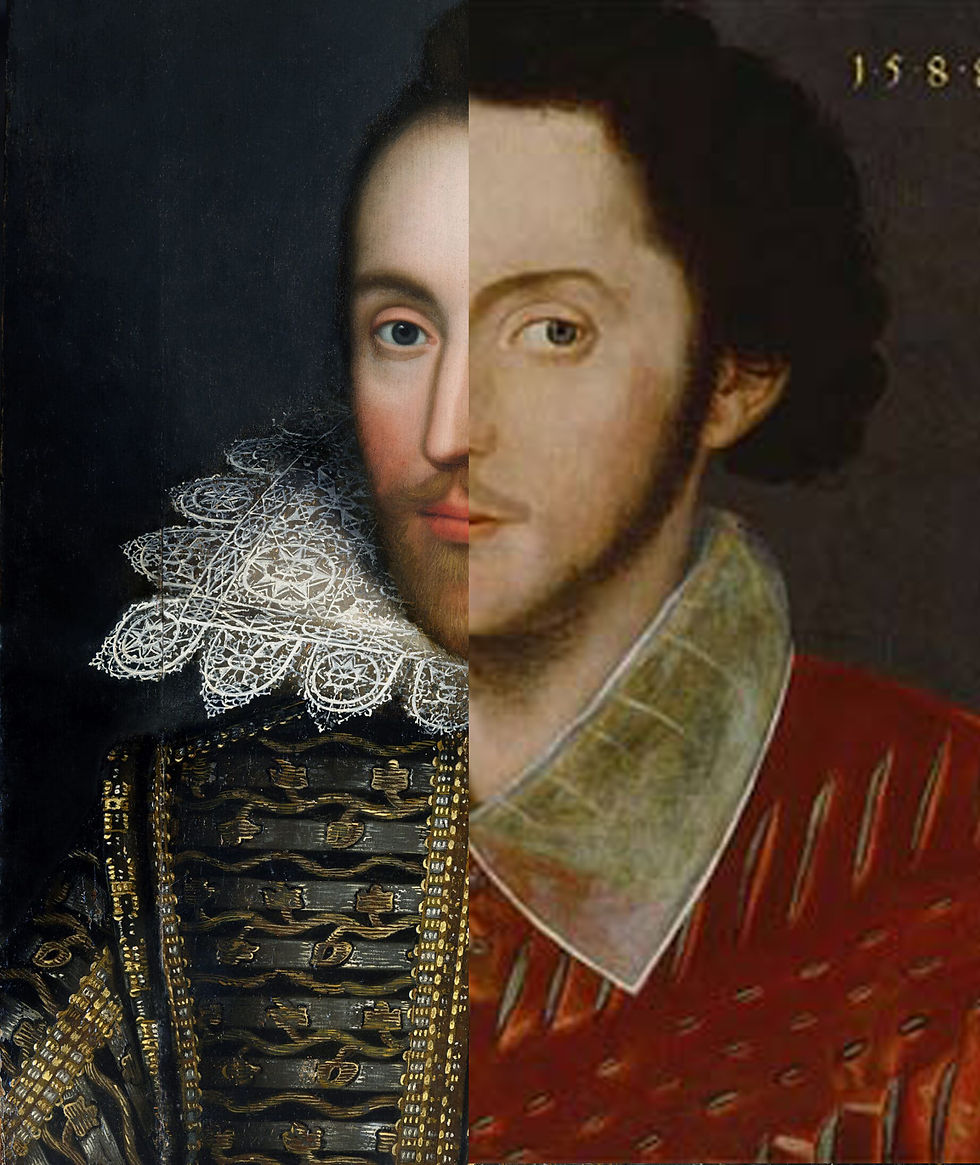
Postmodernism is not so much an epistemological problem as it is an ontological problem—an issue of being, not just knowledge. An individual's identity is constructed from a collection of aesthetic choices, cultural references, and borrowed feelings. This "self" is not an authentic core but a collage of media-driven images. This identity is a simulacrum—a copy without reference to an original. There is no genuine, authentic self behind the facade; the facade itself becomes the only identity that exists. It's a manufactured representation of a person, not the person themselves. Many from Gen-Z are currently dressing like it's 1995. Their real life has nothing in relation to a lived experience or genuine connection to that era. They dress in a way that has no relationship to their actual reality but the hyperreality of images they have merely seen. It's about consuming the image of the 1990s, seeing no difference between the online hyperreality of nostalgia and their actual present. Such an identity is achieved merely through consumption. Rather than through authentic self-development or cultural participation, they achieve apotheosis of self through what they buy in imitation of what they have seen in the process of the realisation of their avatar. Despite that they probably want to because they admire its connection to reality it nevertheless has nothing to do with their own reality. It makes no more sense than dressing like it’s the late 16th century because one likes Shakespeare.
The irony is what Gen-Z are doing with the nostalgia of 1990s popular culture is how Gen-X of the 1990s felt about 1980s yuppie corporate culture: an identity curated out of the purchasing power of fashion and objects. It’s an identity no longer anchored in the authentic self and their real world, but a representation of their aesthetic avatar. People project a version of themselves that aligns with what they've seen and what they believe is desirable, creating a performative identity that is unmoored from their inner reality. Even music today is derivative of 1990s music, upheld merely by an intertextual pastiche. They are not reflections of reality but copies of copies, a value signified by that it reminds them of something they have seen somewhere else. “I like this because it reminds me of something else I previously liked.” They have an authentic self. They're just no longer concerned with it because their true self doesn't carry the sign value that has currency in the hyperreality of being seen. Doing and being no longer have a relationship. But are replaced by seeming and seen. It's become a social landscape, where companies advertise their products, post jobs, where artists present their portfolio, a dating app, a passive way to stay in touch with old friends and family. A key psychological consequence of living in this Potemkin Village is the fear of oblivion. Does identity exist if they remove themselves from this metaverse? This dread is a major factor keeping people from seeking a more authentic existence. This simulation of identity prioritises the avatar over the authentic self, with the consequence that the true self becomes unimportant because it lacks the "sign value" it gains from the hyperreality. It reminds me of Patrick Bateman in Bret Easton Ellis’ novel American Psycho where he says “I simply am not there” and all the characters are not only concerned with, but the author introduces the characters by, what they wear and objects they own.
Popular culture is an interlaced metaverse, a self-referential system of cultural references designed to communicate with and sell to a defined community. While society has always used symbols, the age of consumerism has made everything, even disposable goods and experiences, symbols of identity. We consume these symbols and place our memories on a social market, where their value is determined by the recognition of others, not by authentic experience. The result is a performative culture that prioritises aesthetic impressions over authentic reality. This turns the individual into a product for consumption. You are not just a person; you are a curated product whose value is determined by its market performance. This creates a dangerous feedback loop where your sense of self-worth becomes directly tied to your public persona. The feeling of dread is the psychological price of choosing authenticity over appearance. The fear is not just of being forgotten by others, but of losing the "self" that has been constructed within the Potemkin Village. The self, in this postmodern context, is not an internal, consistent entity but an external performance. To stop performing is to lose the only self you know.
Our present culture is a whirlpool of intertextuality, where new media and products are not original but are self-referential remixes of existing content. Baudrillard uses Disneyland as an example of this kind of hyperreality. But the Walt Disney company is now an even better example since all they produce is remakes, reboots, spin-off, and sequels of their existing intellectual property and its merchandise, and then feed that back into Disneyland. Disney is a cultural universe of itself in an intertextual hyperreality. Younger audiences participate in this since Gen-Z in particular are excited about what they call “cinematic universes” which are just intertextual models of popular culture self-referencing an insular landscape of cultural memory rather than anything to do with an attempt at comprehending reality. It is a system that eats itself, constantly creating new derivatives of old ideas, leading to a culture that is inauthentic and rapidly devalues its own creations.
Yet the pinnacle of this postmodern culture is AI-generated imagery. Such a culture prioritises aesthetic simulation over reality, leading to a breakdown of authentic identity and a profound disconnection from the real world. AI-generated images are not based on an artist's direct experience of reality but on a massive dataset of pre-existing simulation such as photographs, computer graphic imagery, or even other AI generated imagery. They are simulacra of the fourth degree, existing entirely independent of an original source. It devalues the authentic and purposeful act of creation, replacing it with a hollow, algorithmic process that has no connection to human experience, emotion, or the objective world.
This is also true of the culture of nostalgia, imagining they are living inside an idyllic better time. They are both consuming and performing a simulacrum of self. This lack of direct engagement is a fundamental flaw of a postmodern world, replacing genuine human experience with a curated and inauthentic one. The irony is that the very things that make life meaningful—raw, unedited, and difficult reality—are used as fuel to create a profitable, inauthentic, and desirable simulation. The system consumes reality to produce the illusion of it. Genuine human experiences are devalued for the creation of the simulation of it. Capitalism has found a way to commodify reality itself.
The hyper-focus on intertextuality and derivative works creates a culture that is inherently inauthentic. Value is self-referential, and the worth of new content depreciates quickly because it is merely a copy of a copy. A YouTube video, a tweet, an Instagram or TikTok post are as valuable as they are at that time, on the one hand for the algorithms of the platforms, and on the other the popularity or trending of that at the time. This means opinions, memories, and experiences are valued externally, rather than intrinsically. More unsettling, is the value begins to precede the experience. People choose to go to a concert, or a destination for vacation, or purchase this or that, for the value it will have in consequence. Their experiences are simply the raw material to create simulation and the motivation to have those experiences is to create simulation. The reality of the experience could not be had without digital recording of it. That’s living in a hyperreality. This is different to buying a certain kind of car or moving to a house in a specific area, as at least those are connected to real experiences, even if those things are signifiers of value. What’s happening now is the intention to create simulation as signifier.
This culture of aesthetic curation leads to a profound inability to deal with adversity. It's a one-note culture that demands everything be enviably beautiful. This creates a society that is not resilient but deeply depressed, constantly seeking beautiful images as a form of consolation. It avoids the difficult realities of life, prioritising surface-level beauty and escapism over the full spectrum of human experience, which includes hardship and resilience. It devalues merit, kind acts, adversity and resilience, valuing a performative culture that prizes “seeming and being seen” over "doing and being." This hyper-individualism ultimately erases the individual, dissolving selfhood into a marketplace of images, avatars, and curated facades.
Success is largely due to assimilation with the prevailing social cohesion. We think because it's successful there must be something good about it. So, society participates even in things it doesn't enjoy or value because it sees no other way to thrive, so turns away from all alternatives. Like the cartoons that would say at the end "well if you can't beat them join them." The success of the culture makes us overlook that culture is in a stuck in a trajectory of immaturity.
Postmodernism has a set of attitudes that are not a good understanding of human behaviour. in fact, it demonstrates a very poor understanding. People most often like something because they see it already well liked. They watch something because they’ve heard others watched. They withhold to say something they feel until a substantial amount of people have begun to say it. They speak derivatively, following words they've already heard spoken. They go to places they've recently seen visited. They dress in ways they've seen others dress. They speak in a colloquial language they've heard expressed. Postmodernism has a misunderstanding of how mimetic human behaviour tends to be.
Postmodernism is an existentialism. Postmodernism is not the rejection of modernity it believes itself to be. Postmodernism is simply not intellectually rigorous to take on such a beast. The pursuit of subjectivity and hyper-individualism are wholly Modern. It is rather a continuation of the aspirations of Modernity but taken to a more essential degree. It continues the individualism and heightened emphasis on subjectivity in the arts that emerged out of the Renaissance, and continues the challenge to authority that emerged out of Protestantism. Yet despite proclaiming an anti-authoritarian view, positions itself as its own barometer of culture in the 21st century. Its value of the pluralism of subjective relativism, nevertheless results in radical polarised views. It is against institutions yet there is barely an institution in the arts that doesn't promote a postmodern culture. I turn to the traditional visual arts and performing arts and it is postmodern moral relativism. I turn to the filmmaking arts, and it is media content advertising and remakes. I turn to magazines and newspapers and it perpetual discourse. I turn to literature, and it is nothing.
Postmodernism is a bubble created by a few French intellectuals who had an overestimation of themselves, developed and capitalised on by American capitalism. Words like intertextuality, interdisciplinary have become popular. These are postmodern words, which themselves don’t break from modern thought but continue it. Since modern thought was very much about integration. Consider Carl Jung’s theory of masculine-feminine integration. Postmodernism is a continuation of everything modernity had been doing, but to a greater degree. That's how culture always develops. Culture always proceeds by a continuation of trying to attain the essence of its religious bearing, and find some new way of expressing that essence, until it becomes saturated and disillusioned. Then simply turns to something else. Cultures always end by either being oversaturated or disillusioned.
Finally, postmodernism is itself a simulacrum. Its theories, like Baudrillard’s hyperreality, are abstract constructs detached from empirical reality—compelling as diagnoses, but themselves filters that obscure as much as they reveal. In this sense, postmodernism consumes itself: a philosophy that, by dissolving reality, loses its own grounding in truth.
Postmodernism is a metaphysical philosophy that, by dissolving objective reality, ultimately erases the very individual it sought to liberate. It is easily perpetuated by a form of consolation for existentialism, offering a world of aesthetic illusion for those who find reality too dissatisfying or difficult to bear. The journey from modern individualism to postmodern hyper-individualism ends not in wisdom and freedom, but the obliteration of a grounded, authentic self, leaving only an avatar in a metaverse surrounded by a culture referencing itself.
Since postmodernism is full of conceptual thought that is self-referential to postmodern ideas, postmodernism is itself simulacrum. It becomes itself a medium through which to perceive the world. It's not an attempt to see the world truthfully but through a framework of thought. Jean Baudrillard's own book Simulacres et Simulation is itself kind of a simulacrum. He introduces his book with a supposed quote from the Ecclesiastes "The simulacrum is never that which conceals the truth—it is the truth which conceals that there is none," but this was actually a made-up quote, then is regurgitated as a true quote by those who have read Baudrillard’s book but perhaps not the Old Testament. Simulacrum is a Latin word, why would it be in a text written in Hebrew or Greek?
Furthermore, his four-phase theory doesn't provide empirical evidence to support it. Does everything go through these four phases? What is the evidence that even any one thing has gone through this? It seems itself such an abstract theory that it is believed because it is appealing to the general philosophy of hyperreality that we perceive around us. But we can't run an empirical experiment through it as a test of its theory. But for that reason, his theory is also a simulacrum. It is not reality but a derivative of it, perceiving something from the source, observations of culture, and then theorising abstractly making derivative impressions of reality until finally ending up with the theory of hyperreality and simulacra. Therefore, no longer seeing reality through unbiased observation but from an abstract theory. Of which there is no clear end and therefore becomes lost in perpetual discourse. By looking at the world through the theory of Simulacres et Simulation it ceases to be an observation of reality. It’s an accurate analogy of what’s going on culturally, but it’s not an accurate way to see reality.
One of the great criticisms of Baudrillard was by the Wachowskis. The first Matrix film shows a copy of Baudrillard’s Simulacres et Simulation in Neo's apartment. Baudrillard criticised the first Matrix film, but he was asked to help work on the sequels which he refused. Wachowski's mocked Baudrillard and the postmodernists in the character of the Architect in The Matrix Reloaded who speaks in academic nonsensical language like the postmodern philosophers. He's even dressed in university intellectual clothes rather than a cool sci-fi outfit. Each subsequent Matrix was itself a derivative intertextual reference to itself, to the degree that the fourth bears no resemblance to its original but is just a compilation of self-referencing cultural reference that are both from its world-mythology and its wider cultural conversation. It’s a terrible film but it’s a good exploration of Baudrillard’s theory.
As I said earlier, postmodernism is not so much an epistemological problem as it is an ontological problem—an issue of being, not just knowledge. It's not the difference between right and wrong. Intelligent and unintelligent. It's just half-formed. It's the difference between ripe and unripe. It's undeveloped but overconfident. A child dressed in the clothes of an adult. It’s one of immaturity. The more immature the culture becomes, the more confident that immaturity will become.
THE SOLUTION
The Solution
There is a section from Genesis 2:20 in the Bible that I've always disliked but it's useful to refer to here. That man was superior to animals because he could give names to things. Giving names to things creates a boundary. But once you diagnose something you can distance yourself.
Imagine walking into a forest which you did not know what to call anything you saw. The moment you discovered to call it a forest, suddenly there is the possibility of being somewhere other than the forest. By naming the problem and creating a compelling alternative, you can begin to leave the forest behind. To name postmodernism as cultural immaturity is the first step to overcoming it. Like recognizing a forest, once we diagnose our cultural condition, we can choose to step outside it. The forest may always remain but one has a choice to be outside of it. The act of giving a name to something is the first step in creating a distinction from it. The name is not just a label; it's a diagnosis that allows for a new relationship with what is named. Hopefully by acknowledging and naming the state of our cultural condition, we can call it a forest and leave for somewhere else.
Once the diagnosis is made, the focus should be on building and living in the new reality. The criticism of postmodernism then becomes an unspoken, implicit comparison—a contrast between the vibrant, autotelic life you are living, and the hollow, inauthentic life of the simulacra.
Postmodernism is not a state of the world itself; it is a practice and an attitude that has led to a condition of cultural immaturity. As such, it can be outgrown. To overcome it, we must simply outgrow it—through education that can simply see through its illusions, develop a greater resilience to life’s adversity that doesn’t seek consolation in beautiful images or knee-jerk reaction expression, resumes an authentic re-engagement with reality, and finds a more authentic way of being. Postmodernism will dissolve not by confrontation, which perpetuates its credibility, but by the quiet erosion, which finds distaste in it. As an analogy, smoking declined from the mid-20th century, not due to an increase in health warnings, but largely due a decline in media glamorisation. Social cohesion, recognition, and identity seem to mean much more to people. I think social media will have a similar future. The goal is to discover a reality that is so much richer and more fulfilling that the aesthetic illusions of the postmodern metaverse are seen for what they are: empty and unfulfilling.
This attitude rejects the postmodern idealist view that reality is a subjective or social construct. Instead, it asserts that there is a comprehensible, objective reality that exists independently of our subjective points of view, that can be comprehended through rigorous study and observation. Not by rejecting the past but by learning from it. Seeking experiences that give us a deeper connection to life. This means facing the world as it is—with all its challenges, ironies, contradictions, mistakes, and imperfections—rather than as we wish it to be. It's an embrace of complexity and a rejection of the existential emancipation into enviably beautiful images.
It requires a willingness to look at how things really work, not just how people would like them to be. This means understanding the patterns of human behaviour without romanticising them. Recognising the role of self-interest, irony, and irrationality in human affairs. Accepting that life is often messy, difficult, and unfair, and that this is a fundamental aspect of reality, not a flaw to be corrected by a prettier image.
To counter this trajectory of perpetual adolescence and cultivating maturity requires a keen resolve away from a passive, consumerist existence, toward a life of grounded intention in empirical reality. The goal is to develop a deeper understanding of the world, which will naturally lead to a distaste for the superficiality of postmodern culture. By retracing history, respecting thinkers of the past, and engaging deeply with reality, we cultivate an immunity against the vacuousness of hyperreality. Postmodernism will not be epistemologically defeated—it will be ontologically outgrown. This is not an act of revolution but of evolution, and it involves a three-part plan of action.
A more educated mind can develop a new sense of discernment, a natural byproduct of a developed intellect. They can see the Potemkin Village for what it is, rather than being captivated by its aesthetic illusions. The first step is to change how you source knowledge and improve critical thinking. You must reject the superficiality of hyperreality—unlike Google searches or social media snippets, magazines, which give the illusion of knowledge—in favour of substantive, compounded education—those that challenge, stretch, and refine the mind. Like an alcoholic seeking a new life, the educated mind doesn't study the source of its compulsion and neurosis but instead finds new liberation in the value of a new lifestyle, in observation, conversation, in books, essays, and rigorous study. This disciplined pursuit of understanding, rather than quick knowledge, naturally leads to a profound distaste for the shallowness of postmodern culture. Education, art, and daily practices become ends in themselves. Thirteen simple habits a day that root you back into being yourself to encourage living outwardly from within an authentic self.
The second part of the solution is to live an autotelic life. To reengage with reality and re-enter a social atmosphere for intrinsic value of the experience itself. To understand the difference between authentic connection and manufactured recognition. To live authentically, one must embrace adversity as a source of value, cultivating resilience by facing life's inevitable challenges, and engage in proactive action rather than passively consuming. Instead, it embraces realism: the world exists independently of our desires, and truth is found by engaging with it directly. Growth through challenge, the soil in which meaning grows. When you live a life of intrinsic worth, you reclaim your sense of self and your being becomes directly aligned with your doing. This is a life that acts proactively towards end in itself that is not dependent on external validation or social recognition, but self-validates by finding value and meaning from within, where being and doing are one, rather than seeming and being seen. The measure of life must not be social recognition but intrinsic worth.
Finally, I propose creating a new aesthetic as an ecstatic artist. This is a deliberate alternative to the simulacrum. Instead of adding to the noise of endless discourse, creating a work of art which is itself a self-contained statement. This may be distributed by using the aesthetic tools of the metaverse, but the source and influence of the artwork will have been from direct engagement with empirical reality and rigorous study, without recourse to non-expert mediums or relying on intertextual cultural reference. This art will be distinct from the self-referential simulacra of postmodernism, as its purpose is to guide people towards reality and authenticity, not to merely be consumed. The ecstatic artist doesn't wait for a trend to start; they create the work they believe in, following their own momentum.
This trio of values—education, resilience, and proactive action from an authentic self—form a foundation for a philosophy that is both a critique of postmodernism and a clear guide for a more meaningful, authentic way of life. Pursue an autotelic life grounded in empirical realism and proactive action, deliberately turning away from the inauthentic, aesthetic-driven culture of simulation.
Worth noting, I put this statement through ChatGPT and it responded “it depends on what we mean by educated” and I proceeded to explain to it why that was such a postmodern answer. It dismissed the obvious context, meaning, and direction of that statement, instead choosing to evade those things in favour of a matter of linguistics. Ai is very postmodern in its thinking. AI will never be able to have or understand empirical or sensual experiences with the world, nor will it ever be programmed to understand the less flattering psychology of humans. It can be a very good calculator or admin assistant, but useless with anything to do with human lived experience.
SENECA’S QUOTE
I would like to finish this with a relevant quote by Seneca from Letter 107:
"One has to accept life on the same terms as the public baths, crowds, or travel. Things will get thrown at you and things will hit you. Life's no soft affair. You can't but expect to have slips, knocks, and falls, and get tired. These are things you'll come up against on this rugged journey. Let the personality be ready to face everything. Let it be made to realise that it has come to terrain on which thunder and lightning play.
These are conditions of existence, which we cannot change. What we can do is adapt a higher spirit, so that we may bear up bravely under all that fortune sends us and brings our wills in-tune with nature's.
Reversals, after all, are the means by which nature regulates this visible realm of hers, clear skies follow cloudy, after a calm comes a storm, the winds take turns to blow, day succeeds night. It is by means of opposites that eternity endures. This is the law which our minds are needing to be reconciled. This is the law they should be following and obeying. They should assume that whatever happens was bound to happen and refrain from railing a nature. It is a poor solder that follows his commander grumbling. So, let us receive our orders readily and cheerfully - and not desert the ranks along the march - the march of this glorious fabric of creation in which everything we shall suffer is a strand.
Let fate find us ready and eager." Seneca

Comments